
Article · 25 Jan 2025
Challenges in Textile Recycling: The Blended Yarn Problem
What is required to give your old clothes a second life? Textile recycling is not as simple as it may seem. Socks in particular are always made of a blend of different yarns. What are the challenges at the recycling stage?
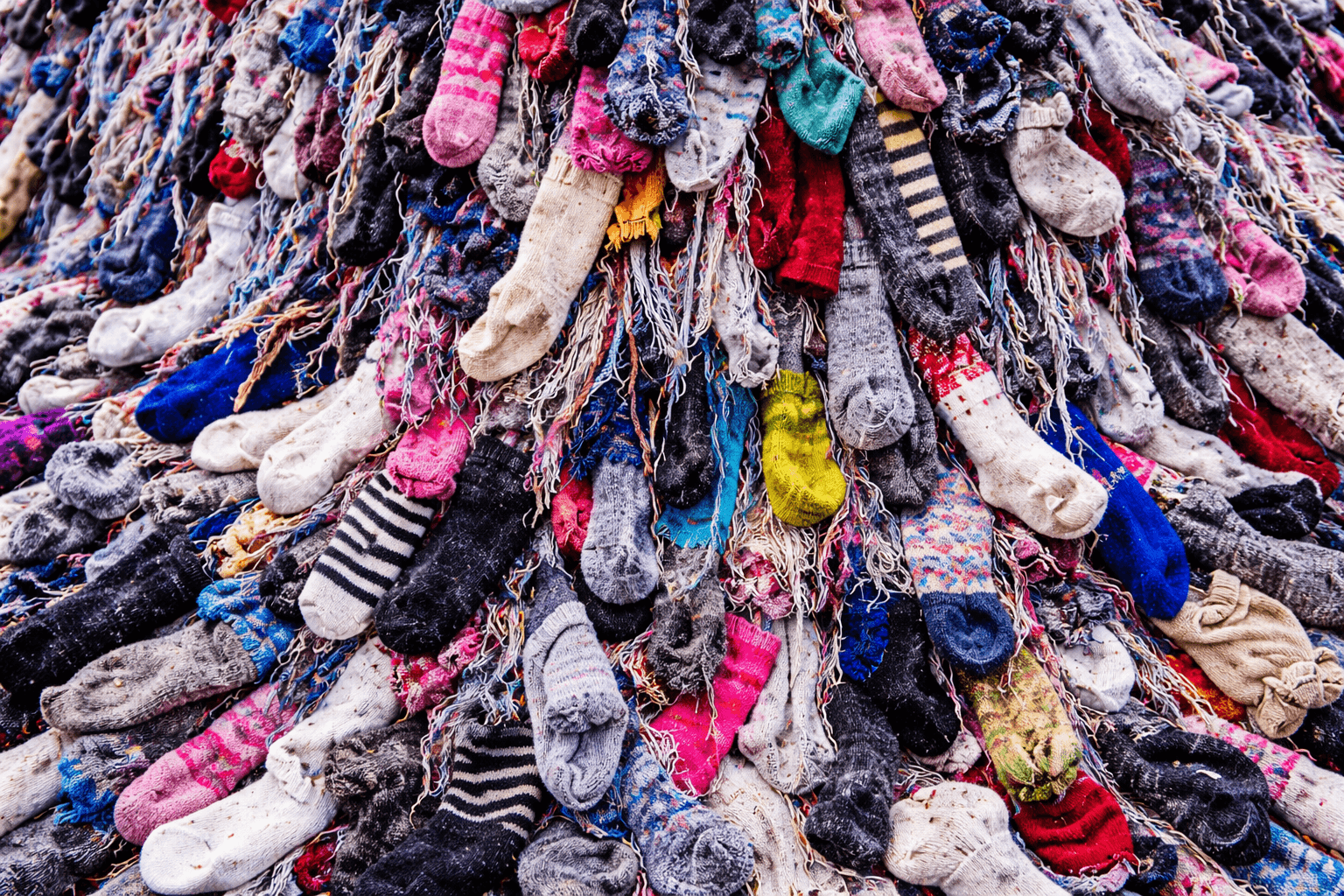
Give Your Old Socks a Second Life
Most people don’t think twice before tossing an old sock in the bin — but that’s exactly the problem. Socks are almost always made from blended fibres: a mix of cotton, nylon, elastane, and polyester woven together for comfort and stretch. That blend is great for creating a nicely shaped, wearable sock with a long lifespan, but it makes recycling genuinely difficult. Separating those fibres back out is one of the textile industry’s biggest unsolved challenges — and it’s why so many socks end up in landfill when they don’t need to.
The first and most important step you can take? Never put old socks in your regular bin. Avoid your old clothes being burned in a landfill somewhere, where the toxic fumes end up in the air we breathe, in the water we drink and the ground we farm on. Always discard them with your textile waste. From there, real possibilities open up.
What Actually Happens When You Recycle a Sock
Once collected and sorted through textile waste collection, socks are cleaned to remove dirt and oils, then broken down mechanically — shredded into raw fibre or processed into pellets, depending on the material. Natural fibres like cotton and wool go through carding, a process that disentangles and cleans the fibres so they can be spun into new yarn. Synthetic fibres like polyester are melted down and extruded into fresh filaments.
The recovered materials can go on to become new textiles — but that’s not the only destination. Recycled sock fibres are also used as insulation material, finding a second life inside walls, flooring underlays, and acoustic panels. It’s a practical, effective use that keeps the material out of landfill and genuinely useful in the world.
The Blended Fibre Problem
Here’s the real challenge: because virtually all socks are made from fibre blends, clean separation is extremely hard with standard mechanical recycling. You can shred a blended sock, but you can’t easily pull cotton apart from nylon or elastane from polyester. What you’re left with is a mixed, lower-quality fibre that has limited uses.
Chemical recycling is the most promising solution — it breaks textiles down to their molecular components, allowing different fibre types to be properly separated and recovered. The technology is advancing, but it’s not yet widely available at scale. Until it is, blended sock waste is one of the trickiest problems in sustainable fashion.
Your Socks, Your Recycling Responsibility
The recycling system only works if the material reaches it. When your socks wear out, if you cannot fix them, put them with your textile waste — not your household rubbish. Some retailers offer drop-off points, but your local textile recycling facility will handle them too. It’s a small habit with a real impact: keeping fibres in use, out of landfill, and on their way to becoming something new — whether that’s a fresh pair of socks or the insulation inside someone’s home.